The New Dinner at Home: How to Have People Over With Intention
The influence of boutique hotels has transformed high-end homes, with the hospitality trend spilling over into private spaces.
Today, having people over for dinner isn’t limited to crafting a menu or opening a nice bottle of wine, it is a design discipline in and of itself.
At Neodomos, we know that the dining area is often the home’s social core. That’s why we design this space as the backbone of the home’s shared areas so that it is connected to the living room and kitchen and everything flows. If the design is well executed, everyone will enjoy their time around the table more and hope the evening will go on into the night.
But the architectural design is only the beginning. A great dining room requires great staging. That’s why the table needs to be planned with the same logic as the one used for the home: striking up a visual balance ensuring that each piece fulfills a practical function and prioritizing guests’ comfort above all else.
This way, the table becomes the climax in a story that begins the moment the guests ring the doorbell. You could say that knowing how to decorate the table for a dinner is temporary architecture when it comes down to it.
The hospitality approach: anticipation and spatial flow
Applying the concepts of hospitality to the home is not a question of decor; it is rather an exercise in intelligent distribution and functional architecture. The goal? Eliminating any factor that may disrupt guests’ natural flow of movement, guaranteeing a truly comfortable at-home experience.
Architecture at the service of hospitality
In contemporary residential projects, like Neodomos’ Signature Homes, the transition between the kitchen and the dining room is crafted at the structural phase to prevent hosts from being isolated and cut off from the main space. Open spaces and good flow allow the preparations to be part of the gathering, thereby transforming dinner into a natural, shared experience.
Functional anticipation: every detail counts
Being a good host means the home must work for the guests. To do that we need to plan their route through the home starting at the front door. Having an entryway with a comfortable place to put things down when they arrive, setting the temperature appropriately based on the number of guests so that it’s not too cold or too hot, and arranging the space so that guests can move around without getting in each other’s way – these are the details that make all the difference.
The devil is in the details. Everything counts, even such tiny barely perceptible ones as the scent when they walk in, to the intensity of the light in the dining room. Each of these components influences the experience and therefore the memory the guests will have of the gathering. The table staging is only the climax of this story unfolding from the moment the guests ring the bell. If the table is well cared for, the message is clear: “I am happy you are here and I have spent time getting everything ready.”
Prioritizing real function over aesthetics is Neodomos’ philosophy when designing each project, ensuring that a dinner at home with friends goes like a charm with no stress or interruptions due to lack of space.

Building the table: textures, proportions, and layers
Preparing a table is a small-scale design challenge and, in order for it to work, you need to structure the space well. When decorating the table for a dinner, it helps to think about layers. This is a visual building process that should start on the basis going layer by layer, seeking a combination of materials and textures that convey harmony, order, balance, and total attention to detail.
Fine materials and controlled contrasts
The basis of the composition should be the integrity of the materials. A washed linen tablecloth adds an organic texture that interacts perfectly with indirect light. On this canvas, combining dishes of the same color, but from various families breaks up the formality.
For the result to look professional, always keep balance in mind. If the dishes are quite classical, use silverware with modern lines. If the tablecloth is a solid color, brainstorm some ideas to dress up the table in a way that adds movement, like using textured napkins or etched glasses.
Height and scale
A beautiful table for guests needs to be three dimensional. But be careful, remember to always consider the height of the components. Once again, don’t put form over function.
Floral centerpieces, candelabras, and other kinds of decorations should always respect the proportions of the dining room and consider the size of the table and position of the diners. If you use decorations that are too tall, they will block the view of the person across the table. Design should never interrupt the conversation. For perfect aesthetics, everything first needs to be practical.

Lighting as a factor in thermal and emotional comfort
You can have the best dining room decor, but if the light doesn’t work because it’s bright white, all your efforts will be in vain.
Lighting is 70% of the atmosphere, so staying on top of it is a basic step to preparing a special dinner at home. A dining room with excessive overhead light or an inappropriate color temperature cancels out all your decorating efforts.
Indirect light sources and use of flame
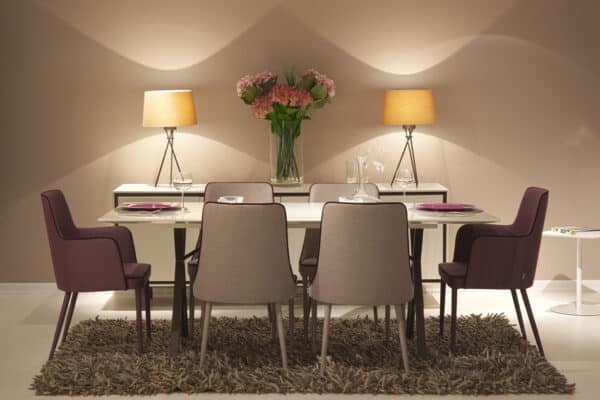
To create a more informal and relaxed environment, avoid direct white light. Instead, opt to turn off overhead lights and use table lamps, dimmable wall sconces and, of course, candles. Candlelight in particular creates an intimate, warm environment, inviting guests to have informal, relaxed conversation.
Adapt the lighting to the time of day
The lighting should accompany the different phases of the evening. Receiving guests requires clear, pleasant lighting, but that intensity should go down gradually as dinner moves toward after-dinner conversation, since, as mentioned previously, dim light helps afford a relaxed atmosphere.
Additionally, if the climate allows for it, extending the after-dinner chat on the terrace is the perfect way to end the evening. That’s why we’ve got a post about how to create a charming terrace so that your outdoor space can also take center stage during your dinner parties.

Music, scents, and little sensory details
Smell is the sense that triggers the most memories. Avoid strongly scented candles at the table, as they can interfere with the taste of the food and may be uncomfortable. You can, however, use a subtle aroma in the entryway as a welcome gesture. The music should serve as a backdrop, an almost imperceptible central thread that elegantly fills the silences, so guests don’t feel awkward.
Welcoming guests with intentionality also means thinking about comfort
Good interior design isn’t preparing the house so that it “looks good in a picture,” but rather making it comfortable for everyone.
Table distribution and spatial flow
Be sure there is enough space between chairs so that no one feels trapped. Guests should be able to get up without everyone else having to move their seat.
Comfortable chairs and flowing conversation
If dinner runs long, a good chair is essential. At Neodomos, we always say that a good dining chair is not just one with a craftsman’s name on it; it is one that allows you to prolong after-dinner chats for hours, almost without noticing.
Balancing aesthetics and functionality
In the same way you should keep an eye on the heights of the components on the table, you should also watch the distribution and amount of space. A spectacular table setting is useless if there’s nowhere to place bottles or if the centerpiece is so big that the platters don’t fit.
As we mentioned previously, guaranteeing minimum clearance between seats ensures smooth uninterrupted movement among diners, even at the room’s maximum capacity.
The role of interior design on new ways of living
Our way of living has changed, and our homes should respond accordingly.
Homes designed to be lived in, shared, and enjoyed
At Neodomos, we design open floorplans where the kitchen is part of the dining space and, in many cases, the dining room is also part of the living room. This allows the person responsible for cooking to not be alone in the kitchen. They can instead be part of the conversation, making prep time part of the meal.
Home as the place to celebrate the everyday
A well-lit, spacious dining room isn’t just for guests, it’s also for you. As the person living in the space, you’ll be the primary beneficiary, as it will improve your daily experience. Good design allows us to enjoy these simple moments more.
Collaborating with an interior designer: dressing a table like a professional
Sometimes having professional opinion helps you see possibilities in your own home that you couldn’t have imagined. An interior designer will help you make the right choice when selecting those key pieces that best define your style when having guests over.
Simple ideas to take your dinner party to the next level
You don’t need a home renovation to improve the way you welcome guests.
- A concept: choose a theme (for instance, “Mediterranean dinner”) and let that guide your decisions.
- Seasonal flowers: details created with simple green branches can be more elegant than a pretentious bouquet.
- Make them feel welcome: put out a card with their name or remember their favorite drink. It’s a luxury, or at least they’ll feel luxurious.
Take care of the details so they feel welcome to stay as long as they like
In the end, decorating the table for a dinner is an act of kindness. It’s not about showing how much you know about design; it’s about creating a space where your guests feel comfortable, loved, and special.
At Neodomos, we design our Signature Homes with this same philosophy. We believe architecture only makes sense when it’s used to create these moments.
Welcoming guests doesn’t require complicated menus or overloaded table settings. What will make a dinner memorable hinges on much simpler things. It’s about caring for the tiny details that can turn any night into a memorable occasion.