Terraces That’ll Make You Linger: Plants, Shade, and Calm
Some homes are best remembered for their terrace. This is not necessarily due to their square footage, but rather due to what they invite you to do: have a leisurely breakfast in the sun, cozy up with a book at the end of the day, have dinner outside when the heat has subsided, work with natural light, or simply get away from the city without leaving home.
When we talk about charming terraces, we’re talking about outdoor spaces designed to be enjoyed. That’s the difference between having a terrace and knowing how to really make the most of it.
At Neodomos we think of terraces as a natural extension of your home: a space designed for living your daily life with more calm, light, and connection to the outdoors.
The terrace as another room
A well-designed terrace isn’t a bonus for the home, it actually is experienced as another room: one that is connected to the interior space and has changing light, temperature and season, accompanying daily life. The more natural that continuity between interior and exterior space is, the easier it is to incorporate it into daily life. That’s why Neodomos designs outdoor spaces during the architecture phase, like all other rooms.
From outdoor space to outdoor living space
Outdoor living is not just a design trend, it’s a way of understanding the home, one in which the outdoors ceases to be a place you occasionally visit and becomes a place where you eat, work, chat, and rest. Architecture helps this way of life when it opens the house to the outdoors without sacrificing privacy or comfort.
Why are we increasingly after terraces we can live on instead of decorative ones?
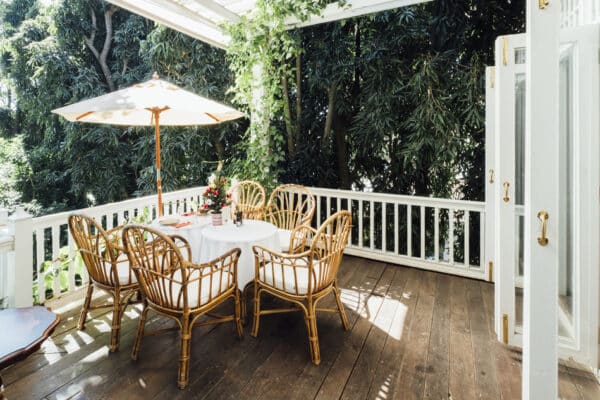
The terraces that function best are not the most idyllic ones, but rather the ones that you want to use. A well-positioned terrace can allow you to start the day having breakfast in the sun and end it with a peaceful dinner al fresco even in the middle of summer.
Functionality is the first step toward comfort. That’s why the key is selecting fine, long-lasting materials that do not require constant attention, allowing you to enjoy the space without worrying about stains or wear and tear.
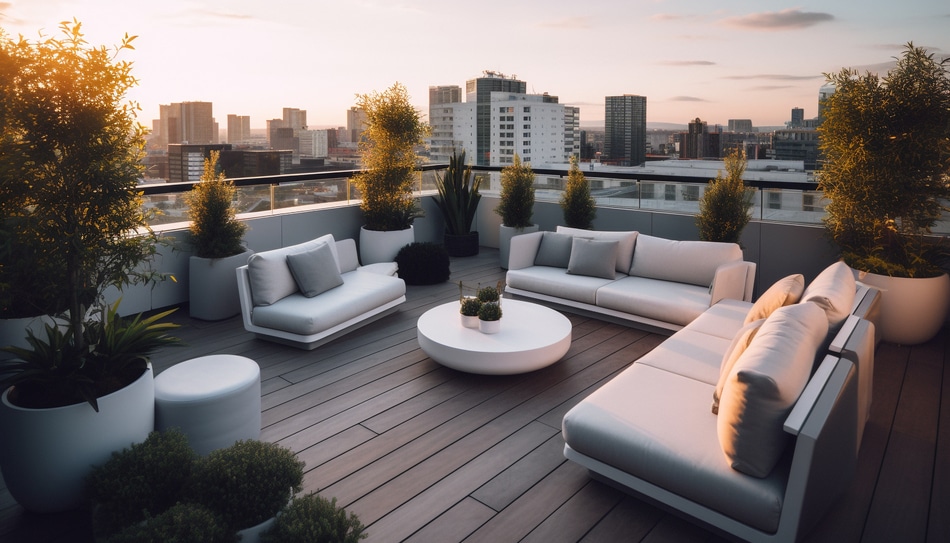
After functionality, it’s important to think about comfort: a table and chairs that will last for long post-dinner chats, a comfy armchair to relax in while reading at sunset or a well-designed shade structure so you can enjoy the space for longer. The idea is to create spaces that invite you to stay, enjoy, and experience them.
Ambiance-transforming plants
Plants entirely shift one’s perception of a terrace. They provide coolness, soften the architecture and increase the feeling of privacy. They also help mark the passage of time, providing a special touch each season because the terrace changes throughout the year, accompanying your perception of each season: flowers and bright colors in spring and part of summer, more subdued colors and browns in fall, and cooler sensations in winter.
Vegetation to provide coolness, privacy, and texture
On urban terraces, plants serve a very practical purpose. They can act as a natural fence to protect your privacy and create distance from the city while reducing the feeling of heat. Combining plants of varying heights – low planters, bushes, climbing plants, and small trees – provides depth and prevents the space from looking flat.
Choosing plants based on terrace orientation
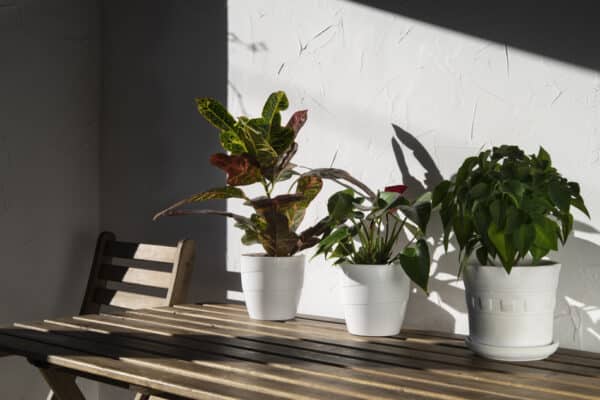
Before choosing species, take note of the light. In south-facing terraces, rugged Mediterranean plants work best. They structure the space without requiring constant upkeep. An olive tree in a terracotta planter or some lavender adds visual volume, thrives in the climate, and creates a natural barrier without overloading the space.
In north-facing terraces or those with fewer hours of sun, the strategy needs to change: we look to generate volume and freshness with textures and different shades of green. Plants like ferns, asparagus, and hydrangeas thrive in the shade, adding a touch of natural color to even the darkest corners. The key for these spaces is selecting broadleaf plants that provide a feeling of order and lightness without overwhelming the space available.
The importance of shade to extend your enjoyment
A terrace with no shade gets used less, no matter how well it is decorated. Direct sunlight can turn a pleasant outdoor space into one that is difficult to use for most of the day. That’s why shade should be considered yet another architectural component and be part of the design from the get-go.
Create restful areas out of the sun
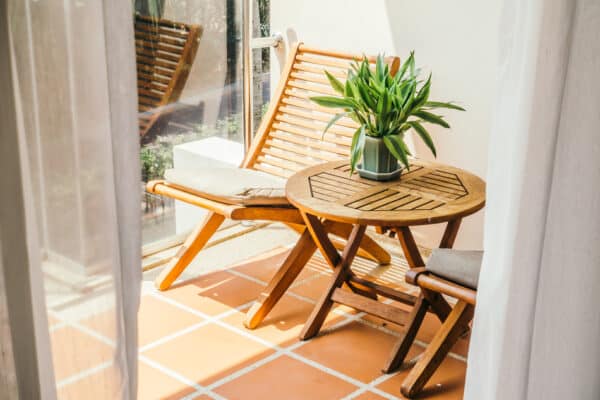
Shaded areas on balconies allow you to extend the use of the space: coffee in the morning, a leisurely chat after a meal, or a bit of reading time in the afternoon. You don’t need to cover the entire space, sometimes just protecting just the relaxing and eating spaces is enough.
Natural shade: how to combine plants and comfort
Climbing plants on lattices, high shrubs, and trees with sparce canopies help lower the temperature and provide gentler shade. In landscaping projects on terraces, this solution is especially interesting because it combines privacy and lower temperatures while also breaking up the rigidity of the concrete, causing the outdoor space to feel much more natural and, therefore, much more comfortable.
Awnings, pergolas, umbrellas, and light solutions
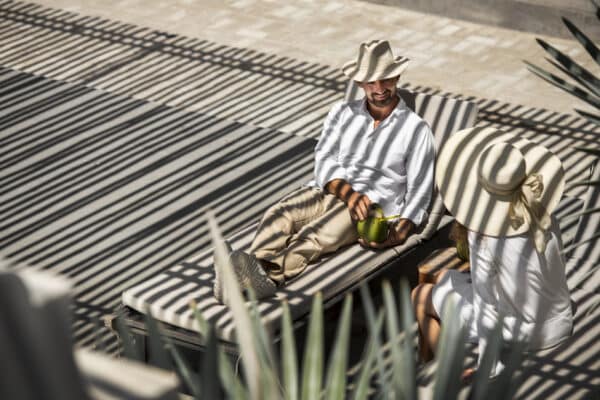
A terrace’s shade determines how many hours it will be used over the course of the day. In large spaces, a fixed structure or adjustable slats allow you to adjust the light and airflow based on the time of day, while on smaller terraces an awning made of a natural material or a stretched canvas is sufficient to garner refreshing coolness right away.
Visual calm: materials, colors, and textiles
Rest also depends on what we see. A terrace with too many colors, mismatched furniture styles, and even untidy objects can ruin the feeling of peace even before you take a seat. A contained, well-combined color pallet with few materials helps to create a clean and tidy space and, therefore, a cozy terrace.
Natural fibers, neutral tones, and long-lasting pieces
Wall and floor finishes in neutral tones (such as sand, off-white, or soft gray) enhance the natural light. Choosing raw textures and matte finishes, rather than polished or synthetic materials, allows sunlight to fall gently on the surfaces with no annoying glare.
Porous textures and mineral-origin finishes also absorb the heat of the day more evenly than metal or plastic. Combining these surfaces with an earth-tone and dusty-green-based color palette helps the give the ambiance an uncluttered look that is much more integrated into nature.
Pillows, outdoor rugs, and warm lighting
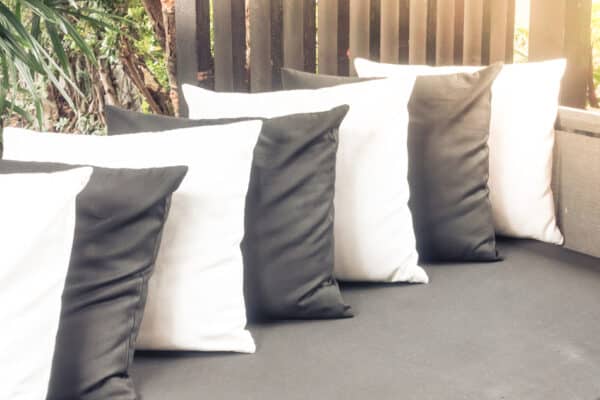
Textiles turn a terrace from furnished outdoor area to comfortable space. Using rugged textiles that will stand up to the elements softens the space and makes it much more habitable.
Lighting should also accompany that comfort. In the evening, it’s best to avoid bright overhead lighting and instead use low, warm light fixtures. That combination is enough to transform the terrace into the most pleasant part of the house when the day is done.
Fewer components, more intention
Excess components are easy to spot when what you’re looking to do in your outdoor space is rest. That’s why instead of accumulating decorative objects with no clear purpose, you should select a few pieces with the right weight and use that are connected to one another. Keeping only the essentials is the easiest way to free up space, facilitating movement around the terrace and creating an environment that is much more comfortable in your day-to-day. The question to ask yourself to know what is and isn’t essential is simple: Does this piece make life on the terrace better? If the answer is no, then it’s probably not essential.
A terrace designed to really be used
Before buying furniture or plants, it helps to stop and think what you really want to do on your terrace. A peaceful place to have breakfast and read is not the same as a large space to hold dinner parties with friends. Knowing how you’re going to be using your outdoor space helps you to choose the right size table and seating options and prevents you from filling the space with things that you won’t use or are uncomfortable.
Reading space, place to chat, or place for chilling out: set the use before decorating
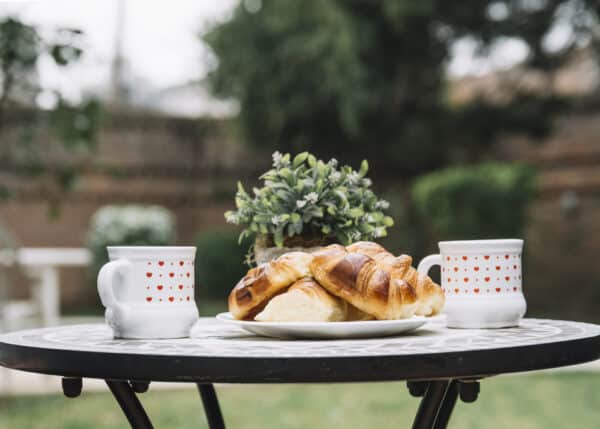
The most livable spaces are the ones that allow you to slow down: a shady reading space protected from the sun, a long post-meal chat at sundown, or a quiet spot to disconnect from the noise of the city.
That’s why it is important to choose how you’re going to disconnect and organize your space around it. If your terrace is going to be used for meals, the first order of business is choosing the right table and leaving space around it so people can move about without tripping, while if what you’re looking for is a place to rest, it’s best to invest in a truly comfortable sofa or armchair in the shade. Details and decorations should be decided at the end of the process. The most important thing is to first determine how you’re going to spend your time outside.
Practical distribution for small and large terraces
If your terrace is small, placing furniture along the perimeter is the best option so you can leave the center free and make the space feel bigger. However, on large terraces, the space is better leveraged if you separate the eating area from the resting area. A group of large planters in a corner or a rug on the floor are sufficient to cleanly mark the difference between one space and another without overloading the space.
How to balance aesthetics and functionality
There is no use in having a spectacular terrace if maintaining it becomes a daily chore. The space only works when it has been designed to be enjoyed worry free. You can achieve this by choosing weather-resistant surfaces, easy-to-clean textiles, and native plants that adapt to the climate with automatic irrigation systems. These decisions make keeping the terrace impeccable a snap and help keep the space always ready for use without constant upkeep.
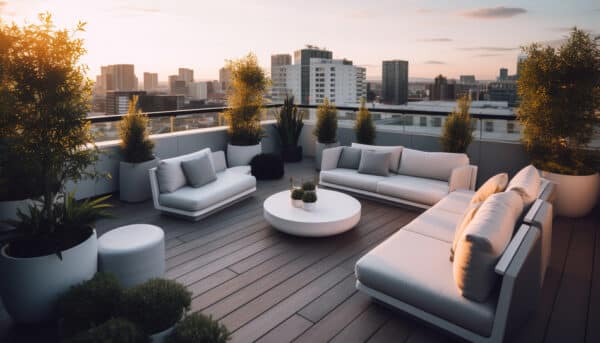
Landscaping as an added value in a home
A cared for terrace not only improves the way people live in the house. It also has an influence on how the home is perceived: larger, more complete, and more connected to the environment.
What a professional landscaping project offers
The vegetation on a terrace needs something more than pretty plants; it requires common sense and knowledge about how each species works. Remember that offering the right amount of water and light as well as choosing the right species prevents having to change them out each season. Thus, the outdoor area stays uncluttered and lively both in the warm months and in the middle of winter.
Work with Neodomos to design a more habitable terrace
Neodomos designs terraces from the very start of the project, not as something added on at the end. That’s why in our Signature Homes, the terraces are designed like any other room in the home, so they flow seamlessly with the indoor space. The result is an open, comfortable home where you can go out onto your inviting terrace any time of day.
How a well-designed terrace enhances the experience of living in the house
More comfortable terraces are not necessarily larger, they are rather those that strike up a balance between shade, privacy, and continuity with the interior, inviting you to use them more.
A good design completely changes the way you use your home. A well-designed terrace can invite you to spend more time outside, to stay a bit longer and acts as an outdoor space that you’ll enjoy every day, making your home larger and more habitable.